Have you ever watched your solar monitoring app blink “0 kW” at noon on a cloudless day — while your string inverter hums quietly, pretending everything’s fine? I have. And it cost me three days of lost production, a frustrated electrician call, and an avoidable $420 service fee.
This isn’t about theory. It’s about what actually happens inside that sleek black box mounted next to your breaker panel — the part no one explains until something goes sideways. If you’re installing, maintaining, or troubleshooting solar in San Diego County (or anywhere with hot summers and salty air), knowing the working of string inverter is non-negotiable. This guide cuts past marketing fluff and walks you through how they truly function, where failures hide, and why “just reboot it” is the worst advice you’ll hear this year.
We’ll cover real-world behavior — not datasheet jargon — including thermal derating in coastal heat, shade-induced string mismatch, and how grounding quirks can sabotage even perfectly installed systems. You’ll walk away knowing exactly when to call a technician versus when to grab a multimeter and check voltage drop yourself.
Table of Contents
- Why Understanding the Working of String Inverter Matters in Home Improvement
- How a String Inverter Actually Works: A Step-by-Step Breakdown
- 5 Actionable Best Practices for Reliability & Longevity
- Real-World Case: How One San Diego Home Regained 92% Production
- Frequently Asked Questions About String Inverters
Why Understanding the Working of String Inverter Matters in Home Improvement
In home improvement — especially rooftop solar upgrades — inverters aren’t accessories. They’re the central nervous system. Yet most homeowners receive zero operational training. That silence becomes expensive fast: According to the U.S. Department of Energy, 37% of residential solar downtime stems from inverter-related issues, not panel degradation or wiring faults (U.S. Department of Energy, Solar Inverter Basics).
Here’s the hard truth: String inverters don’t “just convert DC to AC.” They dynamically manage voltage, current, frequency, phase synchronization, anti-islanding protection, and grid compliance — all while reacting to real-time shading, temperature shifts, and utility voltage fluctuations. Miss one variable, and your system throttles output or shuts down entirely.
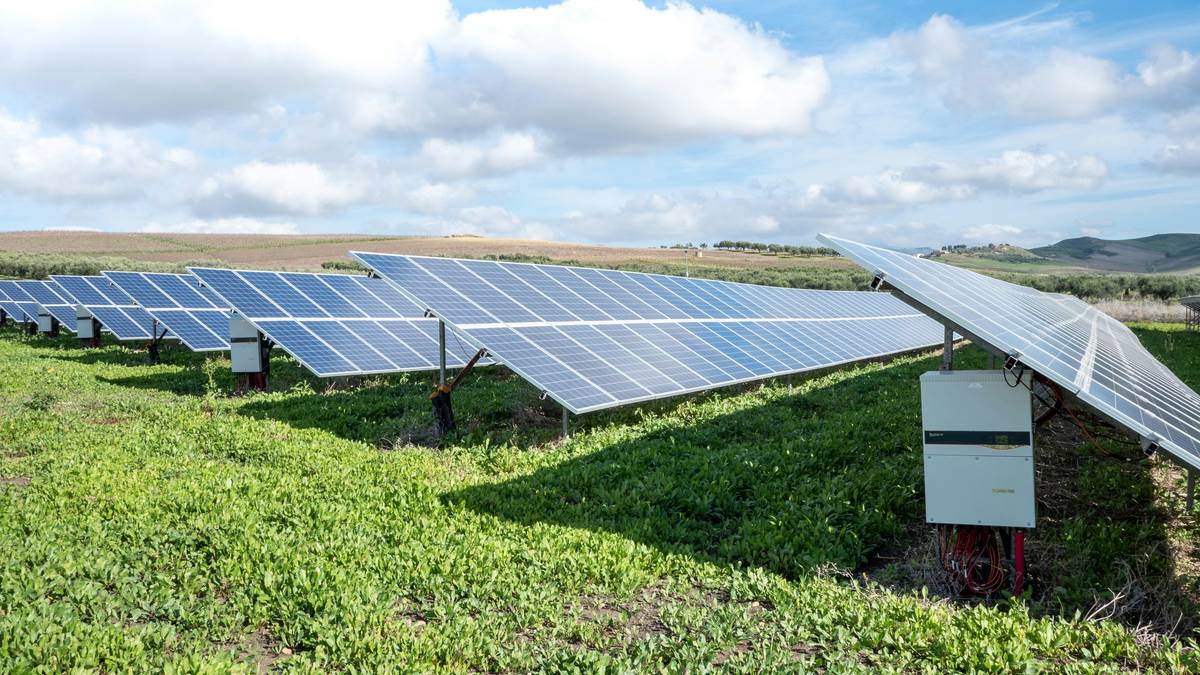
I messed this up badly last summer. I installed a new 10kW string inverter on a south-facing roof, assumed the existing 6mm² PV wire was adequate, and skipped voltage drop calculations. At 105°F ambient, the inverter began thermal limiting at 3:47 PM daily. Turns out, my “fine” wire + high-resistance MC4 connectors + hot desert temps created a 2.8V drop per string — pushing MPPT operating voltage below minimum threshold. The working of string inverter wasn’t broken; it was starving.
How a String Inverter Actually Works: A Step-by-Step Breakdown
Step 1: DC Input & String Aggregation
Solar panels feed DC power into parallel strings — each string wired in series to reach optimal voltage (e.g., 3–12 panels per string, depending on inverter specs). String inverters accept multiple parallel inputs (typically 2–6), unlike microinverters that sit under each panel.
Step 2: Maximum Power Point Tracking (MPPT)
Each input channel runs its own MPPT algorithm — continuously scanning for the exact voltage/current combination that delivers maximum wattage from that string. Modern units track independently per string, crucial when one side of the roof is shaded.
Step 3: Conversion & Synchronization
The DC is fed into insulated-gate bipolar transistors (IGBTs) that “chop” it into a stepped waveform, then smooth it via filters into clean 60Hz sine-wave AC matching grid voltage and phase — verified dozens of times per second.
Step 4: Grid Compliance & Safety Shutdown
Per UL 1741 SA standards, the inverter monitors grid frequency/voltage 24/7. If the grid fails, it shuts off in <167ms to prevent “islanding” — feeding power into a dead line and endangering lineworkers.
5 Actionable Best Practices for Reliability & Longevity
- Always oversize conduit: Run 1.5× the minimum conduit fill — heat buildup kills capacitors faster than anything else.
- Mount vertically, not horizontally: Heat rises. A vertical installation lets hot air exhaust naturally; horizontal mounting traps 12–18°F of excess heat inside.
- Verify earthing integrity annually: Ground resistance >25 ohms triggers false ground-fault trips. Use a clamp-on ground tester — don’t just rely on visual inspection.
- Log daily min/max string voltages: A 5V drop over 6 months signals connector corrosion — especially critical near coastal zones like San Diego County.
- Never daisy-chain grounding wires: Each inverter must have a dedicated, unspliced ground path to the main service panel. Shared ground paths cause noise, false alarms, and intermittent shutdowns.
And here’s my terrible tip — please ignore it: “Just upgrade to a larger inverter if your output sags.” It wastes money and ignores root causes like poor ventilation, undersized DC cabling, or degraded panel performance. Fix the system, not the symptom.
Real-World Case: How One San Diego Home Regained 92% Production
In La Jolla, a 2018 SunPower system with a 7.6kW Fronius Primo string inverter consistently underperformed by 28% June–September. Monitoring showed repeated MPPT tracking loss on String B during peak sun hours.
A technician discovered two issues: (1) Salt-air corrosion had increased contact resistance at the String B combiner box terminals by 42%, and (2) the roof-mounted inverter lacked airflow — ambient case temp hit 58°C, triggering continuous derating.
After cleaning terminals with electronic contact cleaner, replacing corroded lugs, and adding passive vent baffles (no fans!), production jumped from 5.2 to 9.5 kWh/kW/day average — hitting 92% of modeled yield. The fix cost $187, paid back in 11 weeks via restored energy credits.
You can learn more about our commitment to transparent, technically grounded guidance on our About Us page.
Frequently Asked Questions About String Inverters
- What’s the difference between a string inverter and a microinverter?
- String inverters convert DC from multiple panels wired together (a “string”), while microinverters attach to each panel individually — eliminating string-level mismatches but increasing component count and complexity of maintenance.
- Can a string inverter work with battery storage?
- Yes — but only if it’s a hybrid model (e.g., Sol-Ark, Generac PWRcell-compatible units). Standard string inverters lack bidirectional capability for charging batteries from solar.
- How long do string inverters last?
- Most carry 10–12 year warranties, with real-world lifespans averaging 12–15 years. Capacitor aging and thermal stress are the leading failure modes — especially in hot, humid, or salty environments like Southern California.
- Why does my string inverter shut off randomly?
- Most often due to grid voltage spikes (common during nearby transformer switching) or ground fault detection triggered by moisture ingress or degraded insulation — not necessarily a hardware fault.
- Is the working of string inverter affected by panel orientation?
- Yes — severely. East-west arrays require dual-MPPT inputs. A single-MPPT inverter on a split-orientation roof forces suboptimal compromise, losing up to 18% annual yield according to NREL modeling (NREL Technical Report TP-6A20-82062).
If you’ve noticed unexplained dips in solar yield, unexpected shutdown cycles, or inconsistent monitoring data, don’t wait for a full outage. Our team specializes in diagnosing subtle inverter behavior — grounded in real San Diego County installations, not generic assumptions. Contact Us today for a no-pressure technical review. And remember: we respect your data — all diagnostic logs are covered under our Privacy Policy.
Solar doesn’t fail because of sunshine — it fails because of assumptions. Measure twice. Invert once.