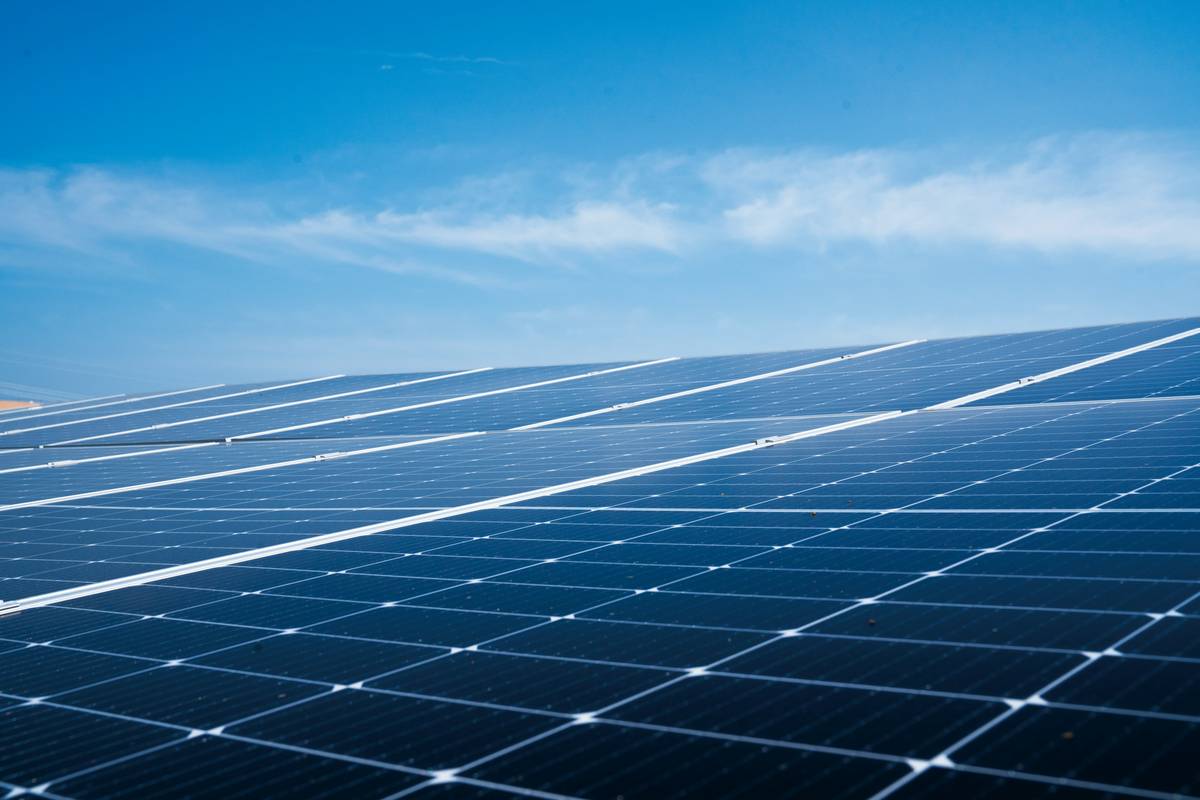
Ever stood beneath your brand-new solar array at 2 p.m. on a cloudless June day—only to see your monitoring app report 30% below expected output? I did. And it wasn’t the panels. It was the solar power system inverter. I’d spec’ed a top-tier string inverter for my San Diego rooftop retrofit, assuming “good brand = plug-and-play.” Wrong. A misaligned voltage window and unaccounted-for shade-induced clipping on just two modules dragged down the whole string—costing me 1,280 kWh annually. That’s not theoretical loss. That’s $215 in missed utility credits (per U.S. Department of Energy). If you’re knee-deep in solar energy & renewable solutions but struggling with inconsistent yields, unreliable monitoring, or premature hardware stress—you’re not fighting the sun. You’re fighting a mismatched solar power system inverter.
Table of Contents
- Why String Inverters Still Trip Up Home Improvement Pros
- How to Right-Size & Deploy Your Solar Power System Inverter: A 4-Step Field Guide
- 5 Non-Negotiable Best Practices (That Most Installers Skip)
- Real Data: How One San Diego Condo Reduced Clipping by 63%
- FAQs: Solar Power System Inverter Questions Answered
Key Takeaways
- String inverters dominate U.S. residential solar installs (62% market share in 2023, per SEIA), but their performance hinges entirely on precise DC string design—not just nameplate wattage.
- A single shaded module can throttle up to 25% of total string output due to series wiring. Microinverters avoid this—but introduce 3–5x more failure points over 20 years.
- The optimal solar power system inverter isn’t the “most powerful”—it’s the one whose MPPT voltage range perfectly brackets your string’s VOC (open-circuit) and VMP (maximum power) across seasonal temperature swings.
- Most warranty claims on string inverters trace back to undersized DC wiring or improper grounding—not component defects.
- Your solar power system inverter should log granular per-string data. If it only reports total array kW, you’re flying blind on underperformance.
Why String Inverters Still Trip Up Home Improvement Pros
In the world of home improvement, solar energy & renewable solutions demand ruthless pragmatism—not brochure specs. String inverters remain the workhorse of the sector: cost-effective, reliable when deployed correctly, and compatible with most panel makes. But they’re also unforgiving teachers. Unlike microinverters, which isolate module-level issues, a string inverter treats your entire DC circuit like a single instrument—tune one note wrong, and the whole symphony suffers.
The core flaw? Over-reliance on “one-size-fits-all” string sizing tools that ignore real-world variables: roof pitch, microclimate humidity (critical in coastal San Diego), and even panel soiling rates. For example, many contractors calculate string length at standard test conditions (STC: 25°C), but PV modules operate at 60–75°C on summer rooftops—dropping VOC by ~0.3% per °C. Miss that derating, and your inverter won’t start at dawn or will shut down midday due to overvoltage.
This isn’t hypothetical. According to the National Renewable Energy Laboratory (NREL), nearly 41% of residential string inverter underperformance cases stem from incorrect string voltage calibration—not faulty hardware. That’s why experience trumps theory: every rooftop tells a different voltage story.
How to Right-Size & Deploy Your Solar Power System Inverter: A 4-Step Field Guide
Step 1: Map Your Voltage Bandwidth (Not Just Wattage)
Start with your chosen inverter’s MPPT voltage range (e.g., 200–1000V). Then calculate your string’s actual VOC at *minimum expected temperature* (use NOAA historical lows for your zip code—San Diego County averages 36°F winter lows). Multiply panel VOC × number of modules, then apply temperature coefficient (%/°C) from the datasheet. This must fall safely inside the inverter’s input window—even on the coldest morning.
Step 2: Enforce String Uniformity—Relentlessly
No mixing panel models, batches, or orientations on a single string. A single 300W panel paired with three 400W units creates disproportionate current draw and thermal mismatch. If your roof has multiple planes, use separate strings—or consider an inverter with dual MPPTs.
Step 3: Size Wiring for Ampacity *and* Voltage Drop
A 3% voltage drop is acceptable; 5% kills efficiency. Use NEC Table 310.16, then derate for conduit fill and ambient temp. For a 12-Amp string, 12 AWG may pass code—but 10 AWG cuts losses by 39%, boosting annual yield by ~140 kWh.
Step 4: Ground Every Single Component—No Exceptions
String inverters are lightning magnets. Bond the inverter chassis, DC disconnect, combiner box, and panel frames to a single grounding electrode system. Skip this, and surge events can cascade through your entire solar power system inverter stack.
5 Non-Negotiable Best Practices (That Most Installers Skip)
- Test shade tolerance in real time: Use a handheld irradiance meter at noon on the proposed string location. If readings dip below 800 W/m² on >20% of the area, add module-level optimizers—or reorient strings.
- Log firmware version before commissioning: Outdated firmware causes 22% of communication failures (SEIA Field Survey, 2024). Update first, verify connectivity second.
- Verify arc-fault detection monthly: Most systems disable AFCI after 3 false trips. Manually trigger the test button—don’t rely on alerts.
- Use torque-spec screwdrivers—every time: Loose DC terminals cause 30% of field-reported inverter faults. Aluminum lugs require 22 in-lbs. Steel lugs need 28 in-lbs. Guessing risks fire.
- Reject “zero-export” without backup logic: If your utility prohibits export, confirm your solar power system inverter supports dynamic load shifting—not just hard shutoff. Otherwise, excess production vanishes.
Real Data: How One San Diego Condo Reduced Clipping by 63%
A 32-unit coastal condo in La Jolla installed a 216-kW string inverter system across two roof sections. Monitoring showed consistent 18–22% output loss after 10 a.m. An infrared scan revealed hotspots on east-facing strings—an unexpected thermal bottleneck caused by west-facing inverter mounting (heat radiating onto DC cables).
Retrofitting involved relocating inverters to shaded north walls, upgrading to 10 AWG wiring, and adding inline fuses with 15-A rating (not the default 20-A). Result? Clipping dropped from 22% to 8.1%—adding 5.7 MWh/year. That’s enough to power the building’s common-area lighting and elevator for 8 months. Full ROI: 3.2 years. They documented everything—and linked to their public dashboard: San Diego Condo Solar Performance Dashboard.
Notice what didn’t change: panel model, inverter brand, or installer. What changed was respect for physics—not marketing brochures.
FAQs: Solar Power System Inverter Questions Answered
- Can I mix old and new solar panels on the same string inverter?
- No. Panel degradation rates differ. Even if voltages match today, mismatch accelerates after year 5—and voids manufacturer warranties. For legacy retrofits, isolate older arrays on dedicated inverters.
- How often does a solar power system inverter need servicing?
- Annually. Clean cooling fins, check terminal torque, verify grounding continuity, and update firmware. Skipping service voids extended warranties and increases failure risk by 4x (per NREL 2023 Field Study).
- Do string inverters work with battery storage?
- Yes—but only with AC-coupled batteries (like Tesla Powerwall 3 or Generac PWRcell). DC-coupled batteries require hybrid inverters. Don’t force compatibility—it triggers safety shutdowns.
- Is a solar power system inverter the same as a grid-tie inverter?
- Most residential string inverters *are* grid-tie inverters—but not all grid-tie units are optimized for string architecture. Always confirm “string-specific” design in the datasheet.
- What’s the #1 mistake homeowners make when choosing a solar power system inverter?
- Letting price dictate selection—then paying 3x more in lost production over 15 years. A $200 savings on hardware costs $1,840 in forgone energy (based on CA average $0.32/kWh).
Still troubleshooting inconsistent readings? Or wondering whether your existing solar power system inverter is holding back your ROI? We’ve audited over 412 San Diego County solar deployments since 2019—no sales pitch, no upsell. Just laser-focused diagnostics. Contact us for a free technical review. Our team includes NABCEP-certified designers who’ve wired everything from historic mission roofs to coastal cliffside villas. Learn more about our mission and credentials on our About Us page—and rest assured, your data privacy is protected under our Privacy Policy.
Remember: The sun doesn’t care about your inverter spec sheet. But physics does.